The Day I Climbed a Granite Cliff in Five-Year-Old Sneakers
How my first trip with the MIT Outing Club turned me into an avid hiker!
As I stood on a ledge, staring at the leap of faith I had to take in the next few seconds, I realized how fast the human mind can travel.
I was halfway up the Beehive Trail in Acadia National Park, clinging to the iron rungs bolted into a granite cliff. Below me was the section I could no longer climb back down. The only way forward was up. Above me, another hiker was telling me where to place my hands and feet. He said that if I reached out my hand, he would pull me on to the next ledge. In those few seconds, my mind raced. I found myself questioning every life choice that had led me to that exact moment. Why did I sign up for this? Why was I climbing a granite cliff in five-year-old sneakers? Why was I fighting to stay alive on what was supposed to be a relaxing long-weekend trip?
The decision that brought me there had been made two weeks earlier.
It was a summer packed with research and conferences, and I wanted to take advantage of the long weekend in June to step away from work and travel somewhere. While looking for things to do, I chanced upon an email from the MIT Outing Club (MITOC) about a trip to Acadia over the Juneteenth weekend. I signed up almost immediately and paid the trip fee of $45.
I had never been to a national park before, but I had heard so much about Acadia. Perched on the coast of Maine in the northeast US, the park is famous for its rugged granite cliffs, forested mountains, and dramatic views of the Atlantic Ocean. With my spot secured, all that remained was to wait ten more days before heading to Acadia for a weekend of camping and hiking.
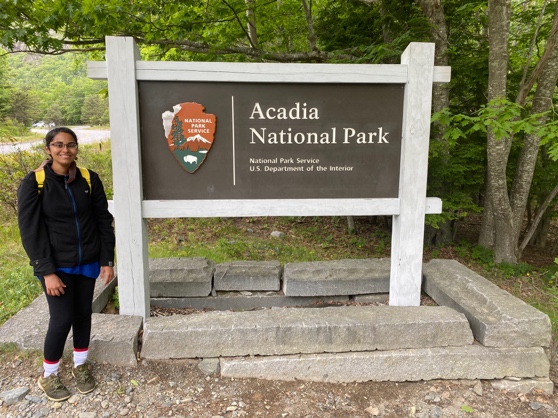
A few days before the trip, MITOC organized a pre-trip meeting for all Acadia attendees. Around sixty people showed up, and I was surprised by how large the group was. The organizers walked us through the logistics of the trip, campground rules, safety considerations, ride-sharing arrangements, and the many activities available in the park. What stood out to me most was the diversity of the group: there were undergraduates, graduate students, postdocs, MIT affiliates, and even people from outside MIT. Some were experienced hikers who seemed to spend every weekend in the mountains, while others were complete beginners. I was relieved to discover that there was no single “MITOC type” and that people of all experience levels were welcome.
As the organizers described the hiking and kayaking options along with other activities around Acadia, I found myself experiencing a mild case of FOMO. What if I chose a hike and missed out on something even better? Nevertheless, it was a good problem to have.
At the meeting, I found someone to share a tent with and made sure I had everything I needed for camping. As for hiking gear, however, I had almost none. This did not concern me in the slightest. My hiking resume consisted of exactly two memorable hikes: the Triund trek in northern India during my undergraduate years and the Masada Trail in Israel, where I hiked through the desert before dawn to watch the sunrise. I had hiked both trails in sneakers, and therefore concluded, with the confidence that only an inexperienced person can possess, that sneakers were perfectly adequate hiking footwear. Little did I know that Acadia was about to challenge that assumption rather dramatically.
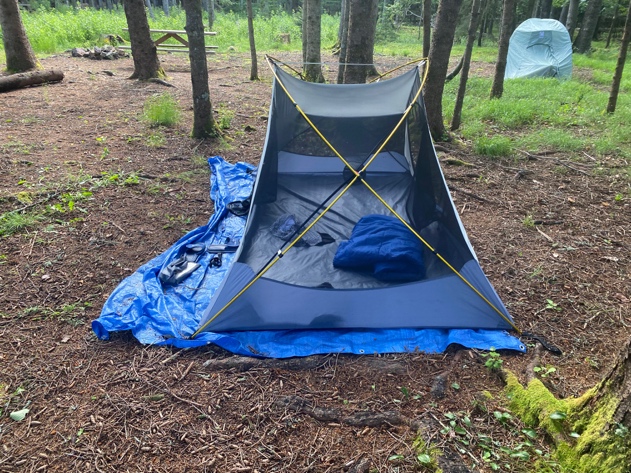
After a five-and-a-half-hour drive from Cambridge, we finally arrived at the campground in Acadia, which was buzzing with activity. People were settling into their campsites, catching up with friends, cooking dinner, and gathering around a campfire. Some were making ramen, others were roasting marshmallows, and there were conversations everywhere. As a notoriously picky eater, I took a less adventurous approach and prepared a ready-to-eat Indian meal using hot water from a kettle. After spending some time chatting with fellow campers around the fire, I headed to bed, excited for the long day ahead.
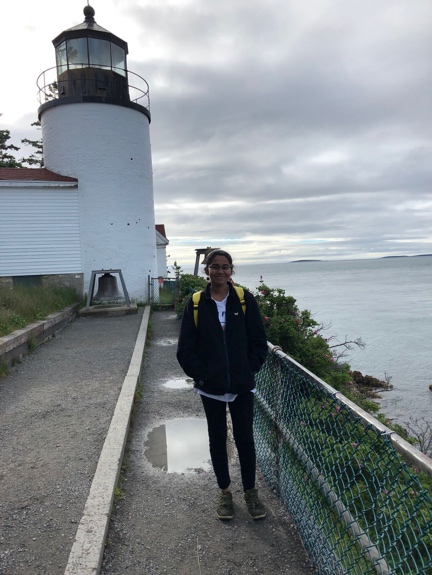
I woke up before sunrise the next morning. Since there was still plenty of time before our group planned to leave for the Beehive Trail, I decided to explore the area around the campground. I spent nearly an hour at a nearby lighthouse, simply looking out at the horizon and taking it all in before returning just in time to join the group for the hike.
At the trailhead, I was greeted by a warning sign stating that several people had died on the hike and that anyone attempting it did so at their own risk. I would be lying if I said that did not make me nervous.
Then I looked around. Nearly everyone else was wearing proper hiking boots. Meanwhile, I was standing there in a pair of worn-out sneakers that I had owned for more than five years. I also lacked most of the gear that hikers normally carry. The weather was surprisingly chilly for June, so I had improvised by wearing three T-shirts and a sweater. My supplies consisted of a few KitKats and 1.5L of water stuffed into a small Minion backpack. Looking back, it was not exactly a textbook example of best hiking practices.
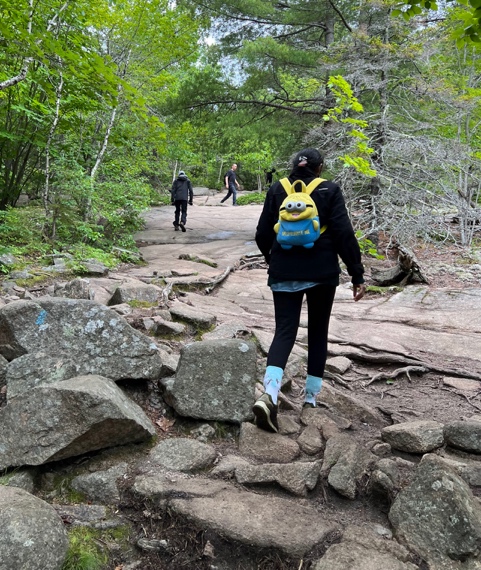
The hike began gently enough, but before long we found ourselves climbing directly up the granite cliffs that make the Beehive famous. I took it one step at a time. As someone whose daily routine mostly involved sitting in front of a computer doing computational chemistry, I was far from the most experienced hiker in the group. I quickly fell behind, but I did not mind. Staying alive seemed like a more important goal than keeping pace.
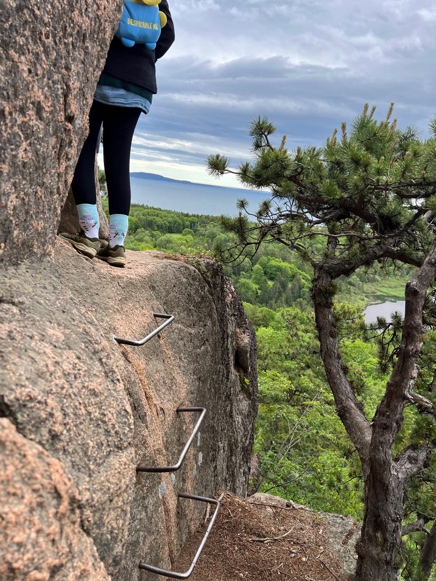
But then I reached a section where I simply could not figure out my next move. A few hikers were waiting behind me, but I was too focused on not falling to my death to worry about holding up the line. One of the hikers above me noticed my hesitation and told me to reach out my hand and trust him.
For a few seconds, I just stood there.
Then I took the leap of faith.
He grabbed my hand, pulled me onto the next ledge, and just like that, the moment was over. I was safe, still very much alive, and ready to continue climbing. The rest of the hike felt much easier. Once I stopped worrying about every step, I could finally appreciate the incredible scenery around me. The combination of forest, ocean, and granite cliffs was unlike anything I had seen before. I took lots of photographs, but none of them came close to capturing what it felt like to stand there and see it with my own eyes.
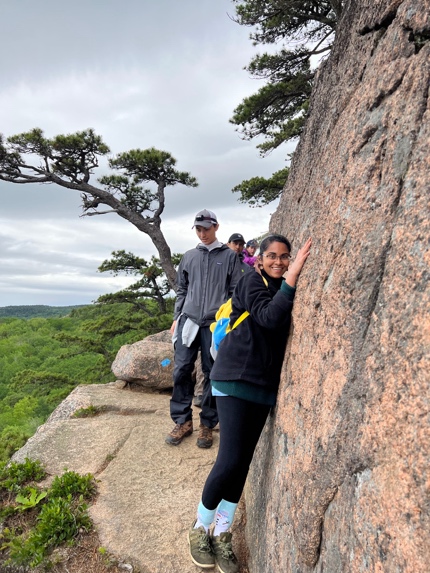
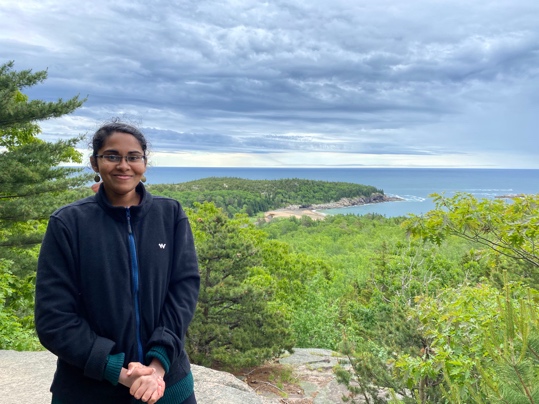
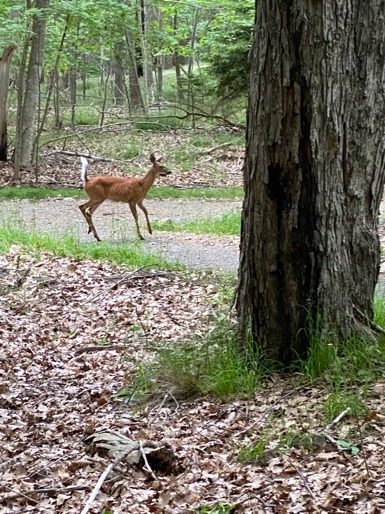
After reaching the summit, we continued hiking for several more miles before returning to camp. The next day, I explored some quieter trails with another hiker, spotted deer along the way, and enjoyed some of the less crowded corners of the park. Before long, it was time to head back to Cambridge.
The trip lasted only a few days, but it changed something for me. I returned home convinced that I needed a proper pair of hiking boots. More importantly, I realized how much I enjoyed being outdoors. After that, there was no stopping me.
After returning from Acadia, I signed up for more MITOC trips. Some of my favorites included the Welch-Dickey Loop in New Hampshire’s White Mountains, Mount Monadnock, and Mount Wachusett. By the following year, I had become involved enough with the club that I even co-led a hike to Mount Wachusett after going through the MITOC leader training.
What began as a single long-weekend trip gradually turned into a hobby that stayed with me long after graduating from MIT. Over the years, I continued exploring trails and national parks across the United States. One of the hikes that I am most proud of is my solo hike to the summit of El Capitan in Yosemite National Park. As a longtime admirer of Alex Honnold, standing on top of El Capitan felt especially meaningful. I may not have the upper-body strength to climb the famous granite wall, but I had enough strength in my legs to hike to the summit and back in a single day.
Looking back, the most important thing I gained from MITOC was not just a collection of memorable hikes. It gave me an accessible entry point into the outdoors. I did not own hiking gear. I did not have a car. I was not an experienced hiker. Yet, for the cost of a modest trip fee, I was able to borrow equipment, join a community of outdoor enthusiasts, and explore places that would have otherwise felt out of reach.
As graduate students, it is easy to spend most of our time moving between the lab, the office, and our apartments. Nature can feel distant and inaccessible, especially if you do not own a car or have prior outdoor experience. My trip to Acadia helped me realize that neither of those things has to be a barrier. Sometimes all it takes is saying yes to an opportunity, even if you happen to be doing it in a pair of five-year-old sneakers.